Forsyth County Dog Registration Information
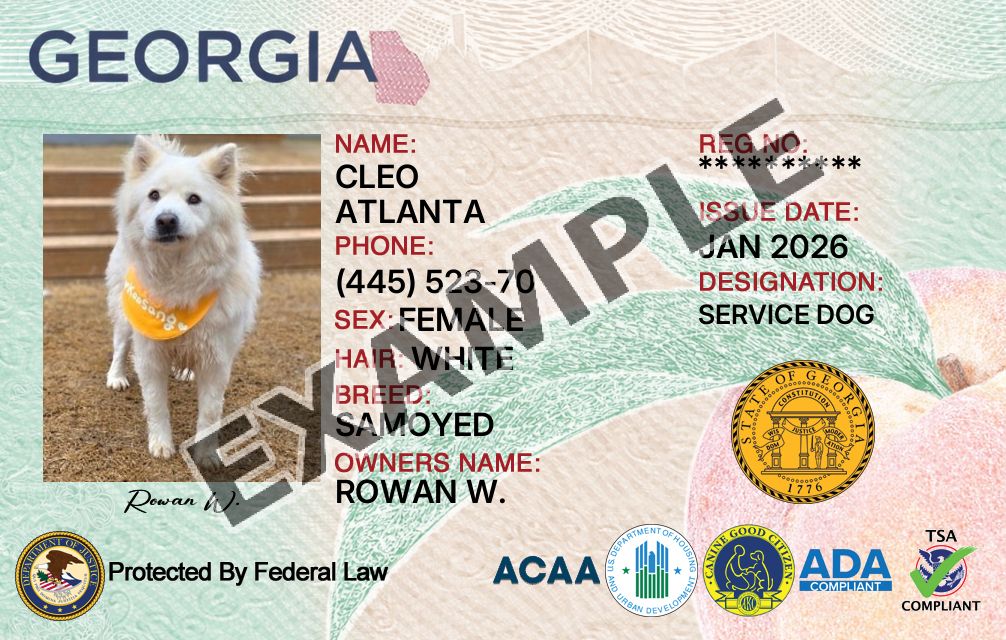
Service Dogs and Emotional Support Animals in Forsyth, Georgia
If you’re searching where do I register my dog in Forsyth County, Georgia for my service dog or emotional support dog, the answer usually starts with the same local step: make sure your dog has a current rabies vaccination and is properly registered with the county agency that enforces animal ordinances and rabies rules.
In Forsyth County, dog “registration” is commonly tied to rabies vaccination and county registration fees. This is separate from whether your dog is a service dog under disability law or an emotional support animal (ESA) for housing-related accommodations.
Where to Register or License Your Dog in Forsyth County, Georgia
Because licensing and rabies enforcement are typically handled locally, the offices below are examples of official government contacts in Forsyth County that residents commonly use for animal control dog license Forsyth County, Georgia questions, rabies-related registration issues, and other local animal services needs. If you are unsure where to register a dog in Forsyth County, Georgia, start with Animal Services.
Official Offices (Examples)
| Office | Address | Phone | Office Hours | |
|---|---|---|---|---|
|
Forsyth County Sheriff’s Office — Animal Services (Animal Control)
Dog registration / rabies registration questions; animal control enforcement
|
100 East Courthouse Square
Cumming, GA 30040
|
770-781-2138 | Not listed | Not listed |
|
Forsyth County Sheriff’s Office — Pet Adoption & Resource Center (PARC)
Impounded animals, shelter services, lost & found support
|
4065 County Way
Cumming, GA 30028
|
(678) 965-7185 | SOPARC@forsythco.com | Not listed |
|
Forsyth County Health Department (Rabies / Exposure Guidance)
Rabies exposure investigations; bite/scratch observation guidance
|
2435 Freedom Pkwy, Ste 2400
Cumming, GA 30041
|
770-781-6909 | Not listed | 8:00 AM – 5:00 PM |
Overview of Dog Licensing in Forsyth County, Georgia
What “Licensing” Usually Means Locally
When residents ask about getting a dog license in Forsyth County, Georgia, they are often referring to the county’s rabies vaccination tag and registration requirements. In many Georgia communities (including Forsyth County), rabies compliance and registration are closely connected: your dog gets vaccinated, receives a rabies tag, and the county registration component is handled either through the veterinarian’s reporting/fee process or directly through animal services depending on where the vaccination occurred.
Key Takeaway for Service Dogs and ESAs
Your dog can be a service dog or an emotional support animal and still need local registration/rabies compliance like any other dog. Local rules generally apply to all owned dogs (and often cats) in the jurisdiction—especially around rabies vaccination, identification, and quarantine requirements after a bite or exposure incident.
Rabies Vaccination Is Central to Registration
Forsyth County’s animal ordinance language indicates dogs and cats over a certain age must be vaccinated against rabies and wear a current rabies tag, and that animals must be registered with the county. If your pet is vaccinated outside the county, owners may need to register directly with the county’s animal services division and pay the appropriate fee.
How Dog Licensing Works Locally in Forsyth County, Georgia
Step 1: Get a Current Rabies Vaccination (Keep the Paperwork)
Start by confirming your dog is currently vaccinated for rabies and that you have documentation (often a rabies certificate from your veterinarian). Rabies vaccination and identification are a major part of how local authorities track animals and respond to bite/exposure events. Keeping clear proof helps if you need to show compliance to animal services, a landlord, a boarding facility, or during a lost dog recovery situation.
Step 2: Understand How County Registration Fees May Be Collected
In Forsyth County, the county ordinance language indicates a registration fee is assessed at the time of rabies vaccinations for registration purposes. Practically, that can mean:
- If vaccinated in Forsyth County: your veterinarian may handle the registration fee process as part of the rabies vaccination visit, following the county’s procedure.
- If vaccinated outside Forsyth County: the owner may be responsible for contacting Animal Services to register the animal and pay the required registration amount.
- Reduced fee situations: if you can provide written verification that your dog is spayed/neutered, the registration fee may be reduced (when allowed by the county’s rules).
Step 3: Keep Identification on Your Dog
Local rules emphasize dogs wearing collars with owner information and a current rabies tag. Even if your dog is microchipped, a visible collar with ID can speed up reunification if your pet gets loose or is picked up. Microchips are helpful, but they are not always a substitute for visible identification in day-to-day enforcement and recovery situations.
Step 4: Know Who Enforces Rules (and Who to Call)
For questions that sound like “animal control dog license Forsyth County, Georgia” or “who enforces rabies tag rules,” the enforcement and registration guidance typically routes through Forsyth County Sheriff’s Office Animal Services. The Health Department is also a key official resource for rabies exposure guidance and bite/scratch observation requirements.
If Your Dog Was Vaccinated Elsewhere and You’re Unsure What To Do
If you recently moved and your dog’s rabies vaccination was done outside Forsyth County, or your vet is in a neighboring county, the simplest path is to call Animal Services and ask what documentation they need to complete county registration for your address. This is especially helpful if you need to demonstrate compliance quickly (for housing paperwork, a local citation, or a time-sensitive travel/boarding requirement).
Service Dog Laws in Forsyth County, Georgia
What Makes a Dog a Service Dog (Not a License)
A service dog’s legal status comes from what the dog is trained to do for a person with a disability—not from a county dog license, a vest, an ID card, or an online registration. A local dog license in Forsyth County, Georgia (rabies/registration compliance) is a separate requirement that applies to owned dogs generally, including service dogs.
Do Service Dogs Need Local Rabies Compliance and Registration?
In practice, yes—service dogs generally still must follow local public health and animal control rules such as rabies vaccination requirements, tag/identification expectations, and quarantine procedures after bites or exposure events. When you’re deciding where to register a dog in Forsyth County, Georgia for a service dog, think of it as two parallel tracks:
- Local compliance track: rabies vaccination, county registration/fees as applicable, tags/ID, and animal control rules.
- Service dog legal track: training to perform disability-related tasks and access rights under applicable laws.
What You Should Not Need
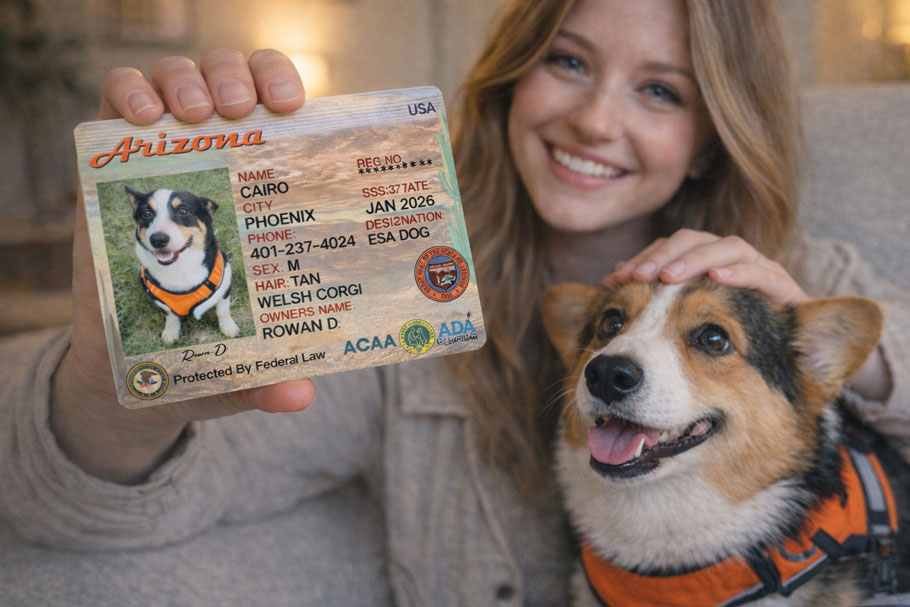
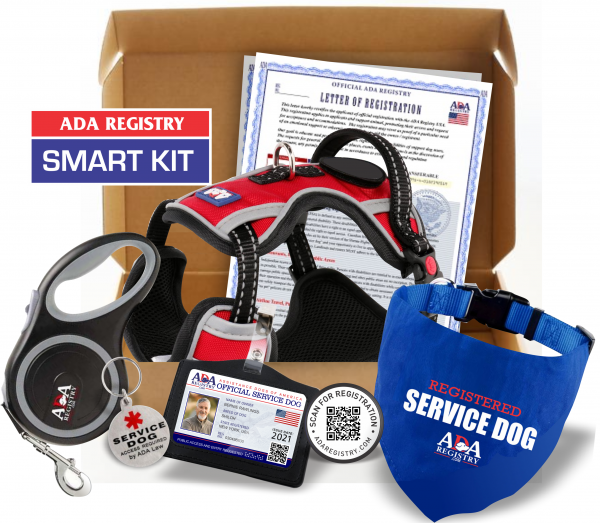
Be cautious about any claim that you must buy a “service dog license,” “service dog registration,” or “service dog certificate” from a private company to have a legitimate service dog. Those items are not the same as local rabies registration or a county-issued animal registration process.
Emotional Support Animal Rules in Forsyth County, Georgia
ESAs Are Not the Same as Service Dogs
An emotional support animal (ESA) typically provides comfort that helps with a person’s mental or emotional health, but ESAs are not the same as service dogs trained to perform specific tasks. This matters because public access rules can differ significantly. If your main question is “where do I register my dog in Forsyth County, Georgia for my service dog or emotional support dog,” the local registration step (rabies/animal services registration) is usually similar, but the legal status and access rights are different.
Does the County “Register” an ESA?
Typically, counties do not run an official “ESA registry” the way some people imagine. What you can register locally is the dog itself for rabies/animal control purposes (the animal control dog license Forsyth County, Georgia concept). ESA status usually comes up in housing contexts, where documentation requirements are handled through property management policies and applicable housing rules—not through the county’s dog licensing process.
Your ESA Still Needs Rabies Vaccination and Local Compliance
Even when your dog is an emotional support animal, it still should remain current on rabies vaccination and follow local identification and control rules. If there is a bite/scratch incident or rabies exposure concern, official guidance and local ordinances may require observation/quarantine steps regardless of whether the dog is an ESA.
Frequently Asked Questions
Start with Forsyth County Sheriff’s Office Animal Services (Animal Control) for questions about county registration tied to rabies vaccination and local enforcement. If your dog was vaccinated outside Forsyth County, Animal Services is the office that can tell you how to complete county registration and pay any required fee.
Your dog’s service dog or ESA status is a separate issue from local rabies/registration compliance.
No. A local dog license in Forsyth County, Georgia (rabies/registration compliance) does not create service dog status. A service dog’s legal status comes from training and disability-related tasks, not from a purchased “license” or online registration.
County ordinance language indicates that if a dog or cat is vaccinated outside the county, the owner is responsible for registering the animal with the county’s animal services division and paying the appropriate fee. Call Animal Services with your rabies certificate details and your Forsyth County address to confirm the current process.
The Forsyth County Health Department investigates animal exposures to determine rabies risk and notes that dogs and cats that bite or scratch people must be observed for ten days.
For local animal control concerns or suspected rabies incidents, residents can also contact Animal Services.
Local ordinance language emphasizes dogs wearing a collar with owner information and a current rabies tag. Keeping visible ID is also helpful for lost-pet recovery and can reduce delays if animal control becomes involved.
Register A Dog In Other Georgia Counties
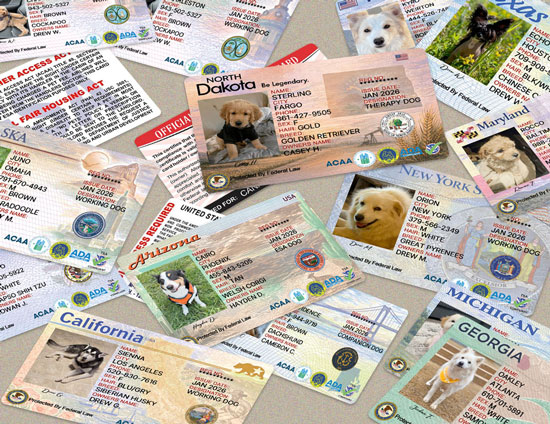
Select your county below to get started with your dog’s ID card. Requirements and license designs may vary by county, so choose your location to see the correct options and complete your pup’s registration.
- Appling County Dog Registration
- Atkinson County Dog Registration
- Bacon County Dog Registration
- Baker County Dog Registration
- Baldwin County Dog Registration
- Banks County Dog Registration
- Barrow County Dog Registration
- Bartow County Dog Registration
- Ben Hill County Dog Registration
- Berrien County Dog Registration
- Bibb County Dog Registration
- Bleckley County Dog Registration
- Brantley County Dog Registration
- Brooks County Dog Registration
- Bryan County Dog Registration
- Bulloch County Dog Registration
- Burke County Dog Registration
- Butts County Dog Registration
- Calhoun County Dog Registration
- Camden County Dog Registration
- Candler County Dog Registration
- Carroll County Dog Registration
- Catoosa County Dog Registration
- Charlton County Dog Registration
- Chatham County Dog Registration
- Chattahoochee County Dog Registration
- Chattooga County Dog Registration
- Cherokee County Dog Registration
- City of Athens County Dog Registration
- City of Augusta County Dog Registration
- City of Columbus County Dog Registration
- City of Cusseta County Dog Registration
- City of Georgetown County Dog Registration
- City of Macon County Dog Registration
- City of Preston County Dog Registration
- City of Statenville County Dog Registration
- Clarke County Dog Registration
- Clay County Dog Registration
- Clayton County Dog Registration
- Clinch County Dog Registration
- Cobb County Dog Registration
- Coffee County Dog Registration
- Colquitt County Dog Registration
- Columbia County Dog Registration
- Cook County Dog Registration
- Coweta County Dog Registration
- Crawford County Dog Registration
- Crisp County Dog Registration
- Dade County Dog Registration
- Dawson County Dog Registration
- Decatur County Dog Registration
- DeKalb County Dog Registration
- Dodge County Dog Registration
- Dooly County Dog Registration
- Dougherty County Dog Registration
- Douglas County Dog Registration
- Early County Dog Registration
- Echols County Dog Registration
- Effingham County Dog Registration
- Elbert County Dog Registration
- Emanuel County Dog Registration
- Evans County Dog Registration
- Fannin County Dog Registration
- Fayette County Dog Registration
- Floyd County Dog Registration
- Franklin County Dog Registration
- Fulton County Dog Registration
- Gilmer County Dog Registration
- Glascock County Dog Registration
- Glynn County Dog Registration
- Gordon County Dog Registration
- Grady County Dog Registration
- Greene County Dog Registration
- Gwinnett County Dog Registration
- Habersham County Dog Registration
- Hall County Dog Registration
- Hancock County Dog Registration
- Haralson County Dog Registration
- Harris County Dog Registration
- Hart County Dog Registration
- Heard County Dog Registration
- Henry County Dog Registration
- Houston County Dog Registration
- Irwin County Dog Registration
- Jackson County Dog Registration
- Jasper County Dog Registration
- Jeff Davis County Dog Registration
- Jefferson County Dog Registration
- Jenkins County Dog Registration
- Johnson County Dog Registration
- Jones County Dog Registration
- Lamar County Dog Registration
- Lanier County Dog Registration
- Laurens County Dog Registration
- Lee County Dog Registration
- Liberty County Dog Registration
- Lincoln County Dog Registration
- Long County Dog Registration
- Lowndes County Dog Registration
- Lumpkin County Dog Registration
- Macon County Dog Registration
- Madison County Dog Registration
- Marion County Dog Registration
- McDuffie County Dog Registration
- McIntosh County Dog Registration
- Meriwether County Dog Registration
- Miller County Dog Registration
- Mitchell County Dog Registration
- Monroe County Dog Registration
- Montgomery County Dog Registration
- Morgan County Dog Registration
- Murray County Dog Registration
- Muscogee County Dog Registration
- Newton County Dog Registration
- Oconew County Dog Registration
- Oglethorpe County Dog Registration
- Paulding County Dog Registration
- Peach County Dog Registration
- Pickens County Dog Registration
- Pierce County Dog Registration
- Pike County Dog Registration
- Polk County Dog Registration
- Pulaski County Dog Registration
- Putnan County Dog Registration
- Quitman County Dog Registration
- Rabun County Dog Registration
- Randolph County Dog Registration
- Richmond County Dog Registration
- Rockdale County Dog Registration
- Schley County Dog Registration
- Screven County Dog Registration
- Seminole County Dog Registration
- Spalding County Dog Registration
- Stephens County Dog Registration
- Stewart County Dog Registration
- Sumter County Dog Registration
- Talbot County Dog Registration
- Taliaferro County Dog Registration
- Tattnall County Dog Registration
- Taylor County Dog Registration
- Telfair County Dog Registration
- Terrell County Dog Registration
- Thomas County Dog Registration
- Tift County Dog Registration
- Toombs County Dog Registration
- Towns County Dog Registration
- Treutlen County Dog Registration
- Troup County Dog Registration
- Turner County Dog Registration
- Twiggs County Dog Registration
- Union County Dog Registration
- Upson County Dog Registration
- Walker County Dog Registration
- Walton County Dog Registration
- Ware County Dog Registration
- Warren County Dog Registration
- Washington County Dog Registration
- Wayne County Dog Registration
- Webster County Dog Registration
- Wheeler County Dog Registration
- White County Dog Registration
- Whitfield County Dog Registration
- Wilcox County Dog Registration
- Wilkes County Dog Registration
- Wilkinson County Dog Registration
- Worth County Dog Registration